
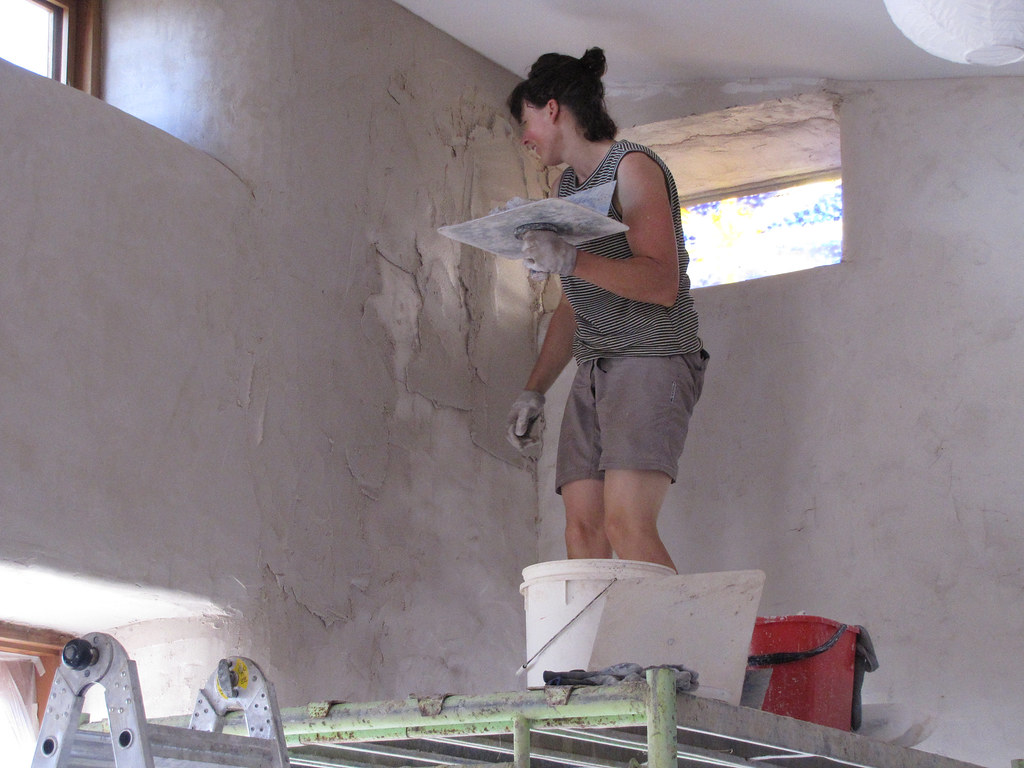
Yes, you can sand plaster, but only lightly and only once it is completely dry. Use 120 to 150 grit sandpaper to take off nibs and trowel marks, then a fine 180 grit pass before painting. A well-applied skim coat should barely need sanding at all. If you are grinding away at the wall, the problem is the plastering, not the sandpaper.
Key facts
- Best grit for plaster: 120 to 150 for nibs and trowel marks, 180 for the final pass before paint
- Only sand plaster once it is fully dry, a uniform pale pink with no dark patches (typically 5 to 7 days for a skim coat)
- Always wear an FFP3 dust mask, gypsum dust irritates the lungs, eyes and skin
- Sand by hand or with a pole sander; use an electric sander only with dust extraction and a light touch
- A good skim coat needs almost no sanding, just a quick de-nib
When should you sand plaster?
Sanding plaster is a light finishing job, not a way to flatten a bad wall. Whether you are working with newly applied plaster or tidying an older surface, the aim is to remove the small nibs, splashes and trowel lines that would otherwise show through paint.
Sand plaster:
- After it has completely dried, typically 5 to 7 days for a standard skim coat. If you are on a deadline, there are safe ways to dry plaster quicker
- Before painting or wallpapering
- To remove minor nibs, splashes and ridges left by the trowel
- To blend the edges of patch repairs into the surrounding wall
- Before applying finishing coats or decorative treatments that need a dead-flat base
Which plasters can you sand?
Modern gypsum plasters, including Thistle Multi-Finish and similar finishing plasters, sand easily once dry. They are soft compared with cement render, which is exactly why a light touch matters.
Lime plaster in older and heritage properties is a different job. It is softer, often slightly uneven by design, and aggressive sanding ruins the character and can pull the surface away from the backing. Get advice before sanding lime plaster in a period property.
What grit sandpaper do you need for plaster?
Stay in the 120 to 180 range for almost all plaster sanding. Coarser paper cuts through a skim coat in seconds and leaves scratches that show through paint.
| Grit | Use on plaster |
|---|---|
| 80 to 100 | Rough backing coat repairs and heavy filler only, never a finished skim |
| 120 to 150 | Removing nibs, splashes and trowel marks from dry skim |
| 180 | Final light pass before the mist coat |
| 240 | Polishing small filler repairs so they disappear under paint |
Tools and materials
- Hand sanding block for walls at arm height
- Pole sander for ceilings and full walls, it spreads the pressure and keeps the pass even
- Folded sheets of 120 grit for internal corners and around sockets
- Random orbital sander with dust extraction for filler and rough patches only
- Dust sheets, and a vacuum with a HEPA filter for the cleanup
Can you sand plaster with an electric sander?
You can, but be careful. A random orbital sander with dust extraction is fine on filler repairs and rough backing patches. Fit 150 grit or finer, set the lowest speed, keep the sander moving and use almost no pressure.
On a fresh skim coat we would not bother. Skim is only 2 to 3mm thick and an orbital sander can cut through to the plasterboard before you notice. A quick hand sand with 120 to 150 grit does everything a skim needs.
Keep power sanders away from edges, external corners and anywhere near beading, where the plaster is at its thinnest. Those spots are quicker and safer done by hand.
How do you smooth rough plaster?
Sanding alone will not rescue a genuinely rough wall. Match the fix to the problem:
- Nibs, splashes and light trowel marks: sand by hand with 120 to 150 grit
- Hollows, gouges and scratches: fill with a fine surface filler, let it dry fully, then sand flush with 180 to 240 grit
- Widespread ridges or a rippled finish: the wall needs re-skimming, not sanding. Sanding a badly finished skim just creates hollows and scratch marks in a different pattern
Work in sections about a metre square and check as you go with a lamp held at a shallow angle to the wall. Raking light shows every ridge and hollow that overhead light hides. Mark defects with a pencil, never a biro or marker, which bleed through paint.
If you scratch or gouge the surface while sanding, do not panic. Fill the damage with fine surface filler and sand it flush once dry.
Should you sand new plaster before painting?
Lightly, yes. Once new plaster is fully dry, give it a quick once-over with 180 grit to de-nib, vacuum the dust off, then wipe down with a barely damp cloth and let it dry.
Then prime it properly. New plaster needs a mist coat of watered-down emulsion to seal the surface before the top coats go on, and it is worth choosing the right paint for new plaster from the start. Painting over unsanded nibs locks them in, and every coat afterwards makes them more visible.
How do you control the dust?
Sanding plaster produces fine gypsum dust, and anyone breathing in the dust cloud is affected, not just the person sanding. Before you start:
- Wear an FFP3 dust mask, safety glasses and gloves
- Sheet up the floor and any furniture you cannot move
- Open the windows and close the door to the rest of the house
- Use a sander with dust extraction wherever possible
- Vacuum with a HEPA filter rather than sweeping, sweeping just puts the dust back in the air
After sanding, vacuum the walls themselves, wipe them with a slightly damp cloth and let them dry completely before any paint goes on.
When should you call a professional?
If a wall needs more than a light de-nib, sanding is the wrong tool. Re-skimming a room is a day’s work for a professional and gives a far better base than a weekend spent sanding a poor finish. The same goes for high stairwells, ceilings and any lime-plastered period property, where conservation-grade materials and methods matter.
If your walls are beyond a light sand, talk to our plasterers in Kent about a re-skim. A freshly skimmed wall should need nothing more than a quick pass with fine paper before painting.
Frequently asked questions
Can you sand plaster?
Yes. Sand plaster lightly with 120 to 180 grit paper once it is completely dry, which takes around 5 to 7 days for a skim coat. The aim is to remove small nibs and trowel marks, not to reshape the wall. A well-applied skim coat only needs a quick pass with fine paper before painting.
What grit sandpaper should you use for plaster?
Use 120 to 150 grit for removing nibs and trowel marks, and 180 grit for the final pass before painting. Save 240 grit for polishing filler repairs. Keep anything coarser than 100 grit for rough backing repairs only, as it will scratch or cut straight through a finished skim coat.
Can you sand plaster with an electric sander?
Yes, but only with care. Use a random orbital sander with dust extraction, fitted with 150 grit or finer, on low speed and with light pressure. Avoid electric sanders on fresh skim coats, which are only 2 to 3mm thick, and keep them away from corners, edges and beading.
Should you sand new plaster before painting?
Yes, lightly. Once the plaster is fully dry, de-nib it with 180 grit, vacuum off the dust and wipe with a barely damp cloth. Then apply a mist coat of watered-down emulsion before your top coats. Never paint over nibs, because every extra coat makes them more visible.
How do you smooth rough plaster walls?
It depends how rough they are. Light nibs and trowel marks sand out with 120 to 150 grit. Hollows and scratches need filling with a fine surface filler, then sanding flush once dry. If the whole wall is ridged or rippled, re-skimming beats sanding every time.
Is it safe to sand plaster walls?
Yes, provided you control the dust. Sanding gypsum plaster produces fine dust that irritates the lungs, eyes and skin, so wear an FFP3 mask and safety glasses, ventilate the room and use dust extraction where you can. Clean up with a HEPA vacuum rather than a brush.
Sources
[1] https://pristinepaintersnyc.com/do-you-sand-plaster-walls-before-painting/
[2] https://sawmillcreek.org/showthread.php?103468-Power-sanding-old-painted-plaster-walls
[3] https://www.bosch-diy.com/gb/en/all-about-diy/sanding-a-wall