
The quickest safe way to dry plaster is good ventilation, gentle background heat of 15 to 20°C and a dehumidifier run on a moderate setting. Never force-dry plaster with direct heat pointed at the wall, as it cracks and weakens the finish. Expect a multi-finish skim to take 2 to 4 days and backing coats 4 to 6 days, longer in winter.
Key facts
- Multi-finish skim: typically 2 to 4 days to dry fully
- Backing coats (bonding, browning): 4 to 6 days, sometimes more
- Drying takes far longer in winter, keep rooms above 10°C overnight
- Best drying conditions: 15 to 20°C with steady, gentle airflow
- Plaster is dry when it turns uniformly pale pink with no dark patches
How long does plaster take to dry?
Fresh plaster contains roughly 30% water, and all of it has to evaporate before you can decorate. A multi-finish skim over plasterboard usually takes 2 to 4 days. A first coat of plaster such as bonding or browning holds far more water, so allow 4 to 6 days, and longer again in cold or damp weather.
Plaster drying happens in two stages:
- Initial set: the plaster firms up and stops taking a fingerprint (1 to 2 hours)
- Complete drying: the deeper moisture evaporates over the following days
Temperature, humidity and air movement decide how fast that second stage goes. Get those three right and you shave days off the wait without harming the finish.
| Drying Stage | Timeframe | What Happens |
|---|---|---|
| Initial setting | 1 to 2 hours | Plaster becomes firm to touch |
| Surface drying | 24 to 48 hours | Surface moisture evaporates |
| Skim coat fully dry | 2 to 4 days | Uniform pale pink colour appears |
| Backing coat fully dry | 4 to 6 days | Deep moisture fully evaporates |
What equipment helps plaster dry faster?
- Dehumidifier: a domestic 10 to 20 litre unit handles a single room, while a 30 to 50 litre site unit suits whole-house work
- Oil-filled radiator or thermostatic heater for gentle background warmth
- Oscillating fan on a low setting to keep air moving
- Moisture meter so you can check readings instead of guessing
- Thermometer and humidity gauge to keep track of room conditions
Can you use a heater to dry plaster?
You can use a heater for background warmth, but never point one directly at fresh plaster. Keep the whole room at 15 to 20°C using central heating or an oil-filled radiator on a low thermostat setting.
Direct heat from a fan heater dries the surface faster than the plaster behind it. That trapped moisture is one of the main reasons plaster cracks and delaminates. Rooms pushed above 25°C are where we see most drying-related failures.
Avoid bottled gas heaters altogether. Burning LPG releases water vapour into the room, so you are adding moisture while trying to remove it.
The same caution applies to airflow. Powerful fans or wide-open windows in damp weather cause surface crusting while the plaster underneath stays wet, a common problem on DIY plastering jobs.
Creating the right drying environment
The ideal temperature range is 15 to 20°C. Warm air holds more moisture and speeds up evaporation, but pushing a room past 25°C forces the surface to dry too fast.
Keep humidity between 60 and 70% for the first couple of days, then bring it down towards 50% as the plaster cures. Dropping it too fast causes surface cracking.
Ventilation matters but needs controlling. Only open windows when the air outside is drier than the air inside, which in the UK usually means warmer, drier days.
| Environmental Factor | Optimal Range | Impact |
|---|---|---|
| Temperature | 15-20°C | Fastest safe rate of evaporation |
| Initial Humidity | 60-70% | Prevents surface crusting |
| Final Humidity | 50% | Ensures complete cure |
Why is my plaster drying patchy?
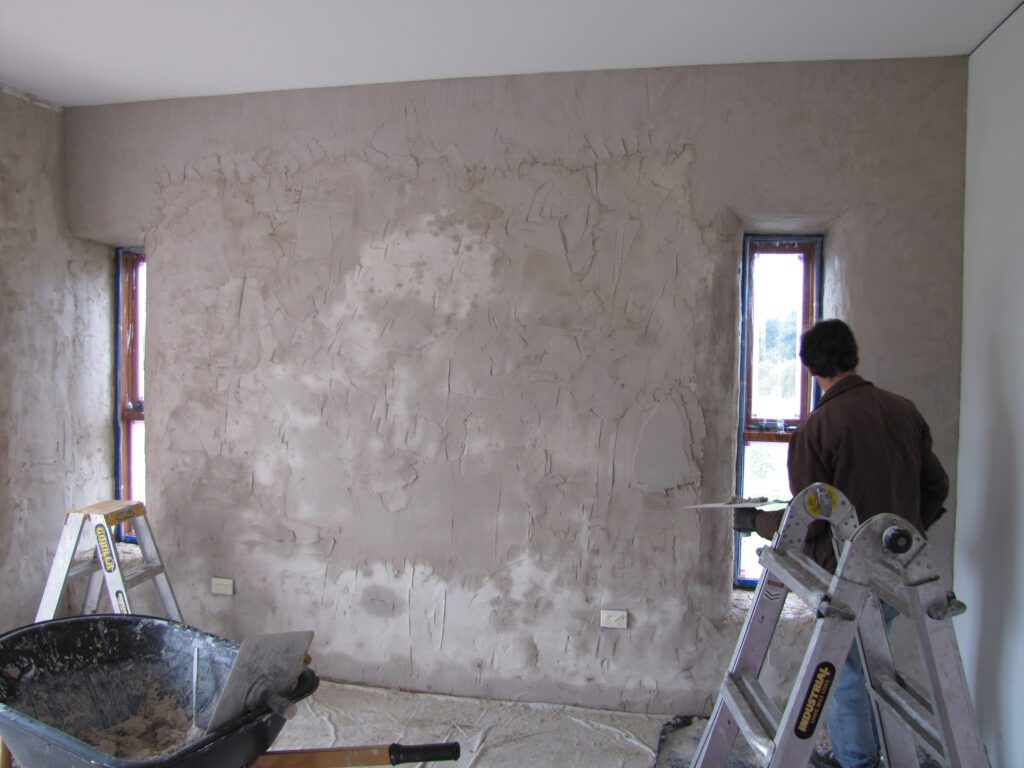
Patchy drying is nearly always uneven moisture, not a fault in the plaster. The dark patches are simply areas still holding water, and they should shrink day by day until the whole wall is an even pale pink.
Patches linger longest in corners, at skirting level and on cold external walls. Thicker spots of plaster and areas over dense backgrounds also dry slower than the rest.
Resist the urge to blast the dark areas with heat. Keep the room temperature and airflow steady and let them catch up. If a patch is still dark days after the rest of the wall has dried, check for a leak or rising damp before you decorate.
How do I know when plaster is dry?
Plaster is dry when the whole surface has turned a uniform pale pink with no darker patches, and a moisture meter reads below 5%. Corners and edges are the last to catch up, so check those before anything else.
- Colour check: even pale pink across the whole surface, no brown patches
- Moisture meter: readings below 5% in several spots, including corners and edges
- Back of hand test: the surface should feel dry and room temperature, not cool or clammy
Once it passes those checks, wait around 7 days from application before using standard emulsion, and always start with a mist coat for new plaster. If you are unsure how much paint that means, our guide to how many mist coats new plaster needs covers it.
Drying plaster in different seasons
British weather has a big say in drying times. In winter, combine gentle background heating with a dehumidifier and keep rooms above 10°C overnight, or drying can stall completely.
Summer humidity slows evaporation more than most people expect. In warm, muggy weather, rely on the dehumidifier rather than extra heat.
Spring and autumn usually give the best natural drying conditions in the UK.
| Season | Main Challenge | Recommended Approach |
|---|---|---|
| Winter | Low temperatures | Gentle heating + dehumidification (maintain above 10°C) |
| Summer | High humidity | Focus on dehumidification, work early morning |
| Spring/Autumn | Variable conditions | Most favourable, standard approach works well |
If you would rather hand the whole job to someone who manages drying times every week, our plasterers in Kent are happy to quote. A properly dried wall is the difference between a finish that lasts 20 years and one that cracks within months.
Frequently asked questions
How long does plaster take to dry before painting?
Wait around 7 days after application before using standard emulsion. The plaster must first turn uniformly pale pink, which takes 2 to 4 days for a skim and 4 to 6 days for backing coats. Always start with a watered-down mist coat, as full-strength paint on new plaster fails to bond and peels.
Can you use a dehumidifier to dry plaster?
Yes, a dehumidifier is the safest way to dry plaster quicker. Place it centrally in the room, at least 2 metres from the fresh plaster, close the windows and run it on a moderate setting rather than flat out. Pulling moisture out too aggressively in the first 48 hours can crack the surface.
Does cold air make plaster dry faster?
No, cold air slows the evaporation plaster relies on to dry. Below 10°C drying can stall entirely, leaving walls damp for weeks. Cold conditions also risk the plaster freezing before it has set, which ruins the finish. Keep the room between 15 and 20°C instead.
How do you dry plaster quicker in winter?
Hold the room at 15 to 20°C with gentle background heating, keep it above 10°C overnight, and run a dehumidifier with the windows shut. Never use direct heat to make up for the cold. Even with good conditions, expect winter drying to take roughly twice as long as summer.
Can I sleep in a room with wet plaster?
Best not to for the first couple of days. Wet plaster is not toxic, but it releases a lot of moisture into the air, which makes the room feel damp and encourages condensation on windows and cold walls. Give it 2 or 3 days with the door closed and a dehumidifier running.
How do you speed up plaster setting time?
Use slightly less water in the mix, as a stiffer mix sets faster. Clean tools and buckets matter too, because old plaster residue makes a fresh mix set unpredictably fast. Remember that setting and drying are different stages: setting is the chemical hardening in the first couple of hours, drying is the days of evaporation that follow.
Sources
[1] https://plasterersdurham.uk/how-to-speed-up-plaster-drying/
[2] https://www.checkatrade.com/blog/ask-a-trade/advice-on-drying-plaster/
[3] https://forums.moneysavingexpert.com/discussion/6082610/how-to-dry-plaster-help