
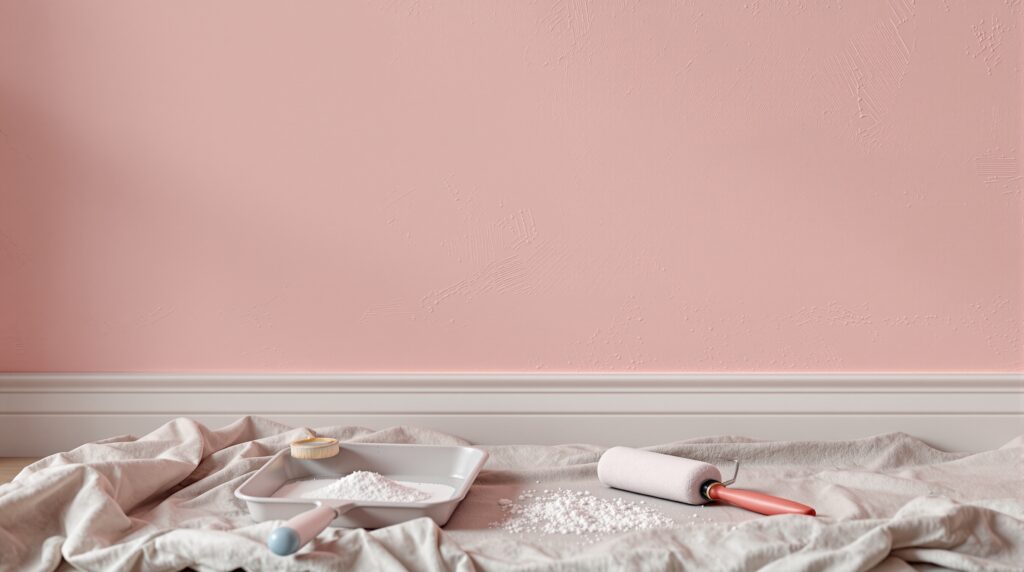
One mist coat is usually enough on new plaster. Mix standard contract matt emulsion with water, roughly 70:30 paint to water, and let it dry for 24 hours. Very porous backgrounds such as hardwall or sand and cement render sometimes need a second, slightly thinner coat. Once the wall stops drinking the paint in, you are ready for two undiluted top coats.
Key facts
- One mist coat suits most new plaster; use two on very porous or hardwall backgrounds
- Mist coat ratio: typically 70:30 emulsion to water, up to 50:50 on very thirsty surfaces
- Use cheap non-vinyl contract matt emulsion, never silk or kitchen and bathroom paint
- Leave 24 hours between the mist coat and the first top coat
- The plaster must be bone dry first: light pink all over, usually 3 to 7 days for a skim
This page answers one question properly: how many mist coats your new plaster needs, and how to judge when one is not enough. For the full background on what a mist coat is and why fresh plaster needs one, read our guide to mist coats for new plaster.
How many mist coats do you need on new plaster?
In most residential jobs, one properly applied mist coat is sufficient to seal the plaster and give your top coats something to grip. Mixed to the correct dilution and applied without overworking, a single coat penetrates the surface and creates the bond that stops paint peeling later.
When do you need a second mist coat?
Apply a second mist coat when the first one vanishes into the wall. If patches of bare plaster still show after 24 hours, or absorption looks uneven across the surface, put on another thinned coat before any top coats.
Very porous backgrounds are the usual culprits. Hardwall, bonding coat and sand and cement render drink paint far faster than a multi-finish skim, so plan for two mist coats on these surfaces from the start. Older buildings and walls with mixed substrates often need the same treatment.
Professional plasterers judge it by eye 24 hours after the first coat. The wall should look uniformly sealed, with no chalky bare patches and no areas still soaking paint in like a sponge. If it passes that check, stop at one coat. Extra mist coats you do not need just waste paint and add a day to the job.
How to apply a mist coat properly
Application technique matters as much as timing and dilution. Start with a clean, dust-free, ventilated room.
Mix your emulsion with clean water in a bucket, starting at a 70:30 paint-to-water ratio. Stir thoroughly, because any unmixed paint will give you inconsistent coverage.
Use a large emulsion roller with a medium pile for the walls and a brush for edges and corners. The technique differs from standard painting: apply the paint generously but quickly, letting it soak into the plaster rather than working it back and forth.
You are not aiming for perfect coverage on the first pass. Some slight patchiness is acceptable and expected. Work in manageable sections and keep a wet edge to avoid lap marks.
Key equipment:
- Large roller and tray suitable for emulsion paint
- Medium-pile roller sleeve (avoid foam rollers, which don’t hold enough diluted paint)
- Quality brushes for cutting in at edges and corners
- Clean bucket for mixing paint and water
- Stirring stick for thorough mixing
- Dust sheets to protect floors and furniture
- Step ladder for reaching high areas safely
If a second mist coat is needed, wait at least 24 hours so the first has dried completely. The second coat can be slightly less diluted, around 80:20, as the plaster is now partially sealed.
What ratio should you mix a mist coat?
A mist coat is heavily diluted emulsion paint applied to fresh plaster as the first layer of decoration. The standard mix is 70% paint to 30% water, though ratios from 80:20 down to 50:50 all get used depending on the paint and how porous the plaster is. Check the tin first, as some manufacturers state their own dilution.
The thinned consistency lets the paint penetrate deep into the porous plaster and form a proper bond. Aim for something close to milk: thin enough to soak in, but still carrying enough pigment to show where you have been.
| Paint-to-Water Ratio | When to Use | Consistency |
|---|---|---|
| 70:30 (Standard) | Most new plaster applications | Similar to milk |
| 60:40 to 50:50 (Thinner) | Very porous plaster, hardwall, sand and cement | Watery, maximum penetration |
| 80:20 (Thicker) | Second mist coat or less porous surfaces | Slightly thicker than milk |
Why bother diluting at all? Freshly applied plaster is absorbent like a sponge. Put undiluted paint straight on it and the plaster pulls the moisture out of the paint before the binder can form a proper film, leaving a weak surface layer that flakes, peels and cracks, often within a few months.
A mist coat soaks into the plaster’s pores and seals the surface while keeping it breathable. Skipping it leads to:
- Premature paint failure and peeling
- Uneven coverage and patchy finishes
- Cracking and bubbling of the paint surface
- Complete repainting needed within months
- Poor adhesion requiring extensive remediation
Can you use any emulsion for a mist coat?
No. Use a cheap, non-vinyl contract matt emulsion and nothing else. Contract matt is made for new plaster, stays breathable, and costs less than the paint you will use for the colour coats.
Avoid vinyl silk, kitchen and bathroom formulations, and anything marketed as scrubbable or moisture resistant. The additives that make those paints wipeable stop them soaking into the plaster, so the mist coat sits on the surface instead of bonding with it. Oil-based paints are worse still: they seal the wall completely and stop the plaster curing.
Our guide to the best paint for new plaster compares specific products for both mist coats and top coats.
How long should you wait before applying a mist coat?
Timing matters more than anything else here. Rush it and you trap moisture beneath the paint, which pushes the film off the wall as it tries to escape.
Wait too long and you damage nothing, you just delay the job. These are the variables that decide when a wall is ready.
How long does new plaster take to dry?
Expect anywhere from 3 days to 4 weeks for plaster to dry sufficiently for painting, depending on plaster thickness, room temperature, humidity and ventilation. Most plasterers work on 3 to 7 days minimum for a standard skim in typical residential conditions, and up to a month for full curing on thicker applications or in cold, damp conditions.
Key factors affecting drying speed:
- Plaster thickness: A standard 2-3mm skim coat dries faster than thicker backing plaster applications
- Room temperature: Warmer rooms (around 20-22°C) speed up evaporation and drying
- Humidity levels: High humidity slows the drying process significantly, low humidity speeds it up
- Ventilation: Good air circulation helps moisture escape from the plaster surface
- Substrate condition: The backing material’s absorbency affects overall drying time
- Season and weather: Winter projects take longer to dry than summer ones
| Plaster Type | Thickness | Typical Drying Time |
|---|---|---|
| Skim coat | 2-3mm | 3-7 days |
| Backing plaster | 10-15mm | 2-3 weeks |
| Multi-finish | 2-5mm | 5-10 days |
How can you tell when plaster is ready for painting?
Judge the wall, not the calendar. The most reliable indicator is a uniform light pink colour across the whole plastered surface. Fresh plaster starts out darker and gradually lightens to that pale pink shade as the moisture leaves it.
Back the colour check up with a touch test. Place your palm flat against the wall: if the surface feels cool or damp, it needs longer. A properly dried wall feels room temperature and completely dry across every area, including corners and edges where moisture lingers.
Some professionals use a moisture meter and look for readings below 1-2% before painting. Ignore these checks and painting too soon causes peeling, cracking and bubbling as trapped moisture forces its way out through the paint film.
Speeding up the drying process safely
You can achieve faster drying with good ventilation and gentle warmth. Open windows to create cross-ventilation, hold the room at a steady 18-22°C, and run a dehumidifier in damp conditions or during winter months.
The don’ts matter just as much:
- Never use direct heat sources like blow heaters aimed at the wall
- Avoid excessively high temperatures above 25°C
- Don’t seal the room completely without ventilation
- Never paint just because the surface looks dry on top
Direct heat dries the plaster unevenly and can crack it. There are more safe techniques in our guide on how to dry plaster quicker.
How long between mist coat and top coat?
Leave the mist coat 24 hours before applying your first top coat of standard emulsion. Unlike the plaster itself, the mist coat dries quickly, but always check by touch that the surface is completely dry, smooth and sealed before you carry on.
There is no advantage in waiting longer once it has dried. Some decorators give the mist-coated surface a light rub with fine-grit sandpaper to remove minor imperfections or raised nibs, then wipe the walls down with a clean, dry cloth to lift any dust before painting.
How many top coats do you need?
For most residential projects, two coats of undiluted emulsion paint give excellent coverage, colour consistency and durability. The first top coat may look somewhat patchy or translucent, particularly with lighter colours or a big colour change from the mist coat.
The second coat provides the uniform, professional finish. A few factors shift this:
- Deep, rich colours or reds may need a third coat for full opacity
- Colours similar to your mist coat might cover in one top coat
- Matt emulsions cover better than silk or satin finishes
- Premium paints with higher pigment loads need fewer coats
Allow at least 4-6 hours between top coats, or preferably overnight, so each layer has dried enough for recoating.
| Stage | Waiting Time | Action |
|---|---|---|
| Fresh plaster applied | 3-7 days minimum | Wait for light pink colour and dry touch |
| First mist coat applied | 24 hours | Assess coverage; apply second mist if needed |
| Final mist coat dry | 24 hours | Apply first top coat of undiluted emulsion |
| First top coat applied | 4-6 hours (or overnight) | Apply second top coat for final finish |
Common mistakes to avoid when mist coating new plaster
Even with the right information, a few pitfalls can undo the job. Knowing them saves you expensive remediation work.
The dangers of rushing the process
The single most frequent mistake in plastering projects is impatience. Whether it’s a project deadline, DIY enthusiasm or contractor scheduling pressure, painting before the plaster has properly dried creates problems every time.
Paint over damp plaster and you seal moisture beneath the film. As that trapped moisture tries to escape, it pushes against the paint layer, causing bubbling, blistering and eventual peeling. We cover the full failure list in our guide to painting on wet plaster. Short version: don’t.
Paint also cannot bond properly to wet plaster, so adhesion fails within weeks or months. In severe cases, moisture trapped behind paint creates the conditions for mould growth, particularly in bathrooms, kitchens and poorly ventilated rooms.
The consequences go beyond looks. Compromised paint adhesion affects surface durability and longevity, so you face the expense and disruption of stripping and repainting far sooner than planned.
Recovery is labour-intensive: strip the failed paint, wait for the wall to dry properly, and start the whole process again. No time saved by rushing justifies that.
Other frequent errors
Beyond timing, these mistakes undermine mist coating most often:
- Incorrect dilution ratios: Too little water and the mix won’t penetrate; too much and you get poor coverage and inadequate sealing
- Poor surface preparation: Dust, debris or loose plaster particles stop paint bonding no matter how good your timing is
- Inadequate ventilation: Sealed rooms with poor air circulation extend drying times and cause uneven drying patterns
- Using the wrong paint type: Oil-based paints, vinyl silk emulsions and moisture-resistant kitchen and bathroom formulations don’t penetrate and can trap moisture
- Over-rolling the mist coat: Working the paint excessively stops it penetrating and creates an impermeable surface layer
- Painting in cold conditions: Rooms below 10°C compromise paint performance and extend drying times significantly
- Ignoring manufacturer instructions: Specific plaster and paint products may have requirements that override general guidelines
The complete process: From fresh plaster to perfect finish
Wait for the plaster to dry completely, typically 3 to 7 days minimum for a skim, watching for that uniform light pink colour across the whole surface. Check corners, edges and window reveals by touch before you commit.
Mix quality emulsion with water at 70:30 and apply the mist coat when the plaster is dry, working quickly and letting it soak in without overworking. Assess coverage after 24 hours and apply a second mist coat only if the wall still shows bare or thirsty patches.
Once the final mist coat has dried (another 24 hours), finish with two coats of undiluted emulsion, leaving 4 to 6 hours between them. The full timeline from plastering to final coat runs 7 to 14 days for standard projects, stretching to three or four weeks for thick plaster or cold, damp conditions.
For homeowners on a first plastering project, the process is entirely manageable with preparation and patience. Property developers managing multiple units, or anyone who wants the result guaranteed, may prefer to hand it to professionals.
If you’re planning a plastering project in Kent or Bromley and want walls perfectly prepared and finished without the guesswork, talk to our plasterers in Kent. We plaster the walls, tell you exactly when they’re ready to paint, and the finish lasts.
Frequently asked questions
How many coats of mist coat do you need?
One mist coat is enough for most new plaster. Check the wall 24 hours after applying it: if bare patches show through or the surface still looks thirsty, apply a second thinned coat. Very porous backgrounds such as hardwall, bonding coat or sand and cement render usually need two coats as standard.
What is the correct mist coat ratio?
Mix 70% emulsion to 30% water for most new plaster. On very porous surfaces you can thin further, down to 50:50, so the paint penetrates properly. A second mist coat can be thicker, around 80:20, because the wall is already partly sealed. Check the tin too, as some manufacturers state their own dilution.
Can you use any emulsion for a mist coat?
No. Use a non-vinyl contract matt emulsion. Vinyl silk, kitchen and bathroom paints and anything scrubbable contain additives that stop the paint soaking into the plaster, so the mist coat cannot bond. Oil-based paints seal the wall and stop the plaster curing. A cheap white contract matt is all you need.
How long between mist coat and top coat?
Wait 24 hours after the mist coat before applying the first undiluted top coat. The surface should feel dry, smooth and sealed. Then allow 4 to 6 hours, or overnight, between the two top coats. There is no benefit in waiting longer than a day once the mist coat is dry.
Do you need two mist coats on hardwall plaster?
Usually, yes. Hardwall, bonding coat and sand and cement render are far more porous than a multi-finish skim, so the first mist coat largely disappears into the background. Apply the first coat thinner, around 60:40 or 50:50, leave it 24 hours, then follow with a second coat at 70:30 or 80:20.
What happens if you skip the mist coat?
The paint fails, usually within months. Fresh plaster pulls the moisture out of undiluted emulsion before it can form a proper film, leaving a weak layer that peels, flakes and cracks. Fixing it means stripping the failed paint and starting again, which costs far more time than the mist coat would have.
Sources
[1] https://lopcocontracting.com/how-long-should-plaster-cure-before-painting-it/
[2] https://www.mybuilder.com/questions/v/3746/how-long-after-plastering-can-you-paint-a-mist-coat-on-and-what-is-the-ratio-water-to-paint-thank-you
[3] https://www.mybuilder.com/questions/v/7738/how-long-before-painting-on-newly-skimmed-walls