
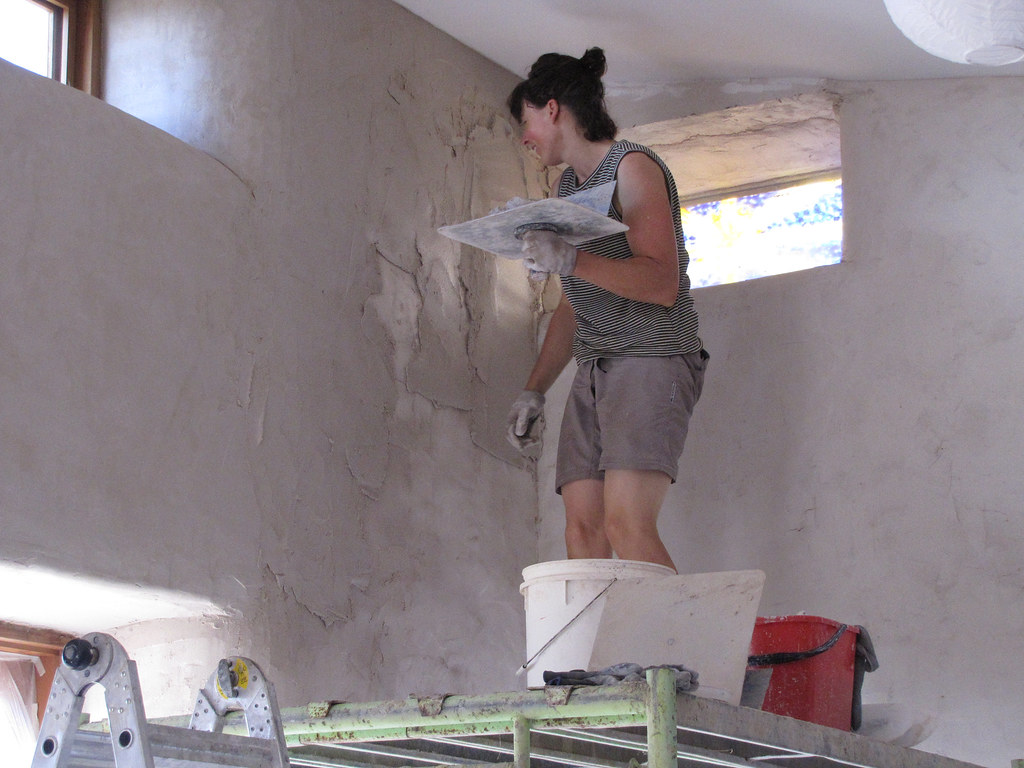
Yes, you can plaster over tiles, as long as every tile is solidly bonded to the wall and you use a high-grab primer such as Febond Blue Grit before skimming. It works, but removing the tiles first is usually the better job. Hollow, loose or damp tiles will take your new plaster off with them.
Key facts
- Plastering over tiles only works if every tile is solid. Tap each one and take off any that sound hollow.
- Use a high-grab primer (Febond Blue Grit or Thistle Bond-it). PVA on its own will not hold on glazed tiles.
- A skim over tiles adds 3 to 6mm to the wall, so sockets, sills and door frames may need adjusting.
- Never plaster over tiles in a shower or splash zone. Standard skim plaster is not waterproof.
- Removing the tiles costs more up front but gives a flatter wall that lasts longer.
Should you plaster over tiles or take them off?
If the tiles are stuck fast, plastering over them saves a day of hacking off, a skip load of waste and the repair work that usually follows. On a sound wall it is a legitimate shortcut, and plenty of plasterers do it.
The honest answer, though, is that removal is the better job in most cases. Here is how the two options compare.
| Plaster over tiles | Remove tiles first | |
|---|---|---|
| Typical cost per wall | £150 to £250 | £250 to £450 |
| Time | Half a day to a day, plus primer drying | 1 to 2 days |
| Added thickness | 3 to 6mm on top of the tiles | None, wall returns to its original line |
| Risk | Fails if a hidden loose tile lets go later | Low once the wall is made good |
| Finish | Good, if the tiled surface is flat | Best possible |
Reasons to plaster over the tiles:
- No hacking off, so no damaged plasterboard or blown render behind the tiles to repair
- Cheaper and quicker, often finished in a day once the primer has dried
- Far less dust, noise and waste
Reasons to take them off:
- You keep the original wall line, so sockets, worktops and architraves still fit
- No risk of a hidden loose tile cracking the new plaster months later
- The wall behind can be checked for damp and made good properly
Removal costs more because of the extra labour and making good. Our UK plastering price guide breaks down what skimming and re-plastering should cost, room by room.
How do you plaster over tiles step by step?
- Tap test every tile. Solid tiles sound dull, loose ones sound hollow. Take off any hollow tiles and fill the gaps flush with bonding plaster or sand and cement.
- Degrease the whole surface. Wash the tiles with sugar soap, rinse and let them dry. Grease and soap film stop primer gripping, especially in kitchens.
- Rake out any failing grout and brush off the dust. Sound grout lines actually help, as they give the primer extra key.
- Prime with a high-grab primer. Roller on a full, even coat of Febond Blue Grit and leave it for 24 hours. Thistle Bond-it is the alternative and can be plastered sooner.
- Skim two coats of multi-finish. First coat around 2mm, second at 1 to 2mm, then trowel up as normal. If the wall is out of level by more than a few millimetres, level it with a bonding coat first.
The same rule applies here as when plastering over wallpaper or plastering over wood: the finish is only ever as good as the surface underneath it.
What primer do you need to plaster over tiles?
Use a gritted bonding agent made for smooth, low-suction backgrounds. The two products plasterers reach for are Febond Blue Grit and Thistle Bond-it. Both dry to a rough, sandy film that fresh plaster can key into.
Do not rely on PVA by itself. Glazed tiles have no suction, so PVA just sits on the surface as a weak skin and the skim can slide or debond before it has even set.
A 10 litre tub of Blue Grit covers roughly 40 to 50 square metres, which is more than enough for a full bathroom. Leave it to dry fully, normally 24 hours, before you plaster.
Can you skim over tiles or do you need a bonding coat?
You can skim straight over primed tiles if the tiled surface is flat and true. Two coats of Thistle Multi-Finish at 3 to 4mm total is the standard approach.
If the tiles step in and out, or you have removed a few and the wall behind sits lower, put on a coat of bonding plaster first to bring everything level, then skim once it has firmed up. Trying to level a bad wall with finish plaster alone ends in cracking and grinning.
Can you plaster over tile adhesive?
Yes, and this is the more common job. Once old tiles come off, the wall is usually left covered in ridges of adhesive. Scrape off anything loose with a wide scraper, prime, then skim.
Ridges under about 5mm can be skimmed over once primed. Deeper lumps need knocking off or levelling with a bonding coat first. Dry, well-stuck cement-based adhesive is a perfectly good background for new plaster.
Can you plasterboard over tiles instead?
You can, but not with dot and dab. Drylining adhesive does not grip glazed tiles reliably, so the boards need mechanical fixings: screws driven through the tiles into the masonry or studs behind, with plugs on solid walls.
Boarding over adds 15mm or more to the wall, which affects sockets, window reveals and door frames. It makes sense when the tiled wall is too uneven to skim. Otherwise, priming and skimming is less work and takes up less room.
If you would rather not gamble on what is behind your tiles, our plasterers in Kent will look at the wall and tell you straight whether it is worth skimming over or stripping back.
Frequently asked questions
Can you plaster over tiles in a bathroom?
Yes, on walls that stay dry. Never plaster over tiles in a shower enclosure or directly behind a bath or basin, because standard skim plaster is not waterproof. For splash zones, remove the tiles and re-tile, or fit a cement board system instead.
Can you skim over tiles?
Yes. Prime the tiles with Febond Blue Grit or Thistle Bond-it, leave it to dry, then apply two coats of multi-finish plaster at 3 to 4mm total. Only skim tiles that are clean, solid and reasonably flat.
What primer do you use to plaster over tiles?
A gritted bonding primer such as Febond Blue Grit or Thistle Bond-it. Both leave a rough film on the glazed surface for the plaster to key into. PVA on its own is not suitable because glazed tiles have no suction.
Can you plaster over tile adhesive?
Yes, as long as the old adhesive is dry and well stuck. Scrape off any loose patches, prime the wall, then skim. Ridges deeper than about 5mm should be knocked back or levelled with a bonding coat before the finish plaster goes on.
Can you plasterboard over tiles?
Yes, but fix the boards mechanically with screws and plugs driven through the tiles into the wall behind. Dot and dab adhesive does not bond reliably to glazed tiles. Allow for the extra 15mm or so of wall thickness at sockets and frames.
How much does it cost to plaster over tiles?
Expect roughly 150 to 250 pounds per wall for priming and skimming, depending on size and access. Removing the tiles first and making good usually adds 100 to 200 pounds per wall in labour and waste, but gives a flatter, more reliable finish.