
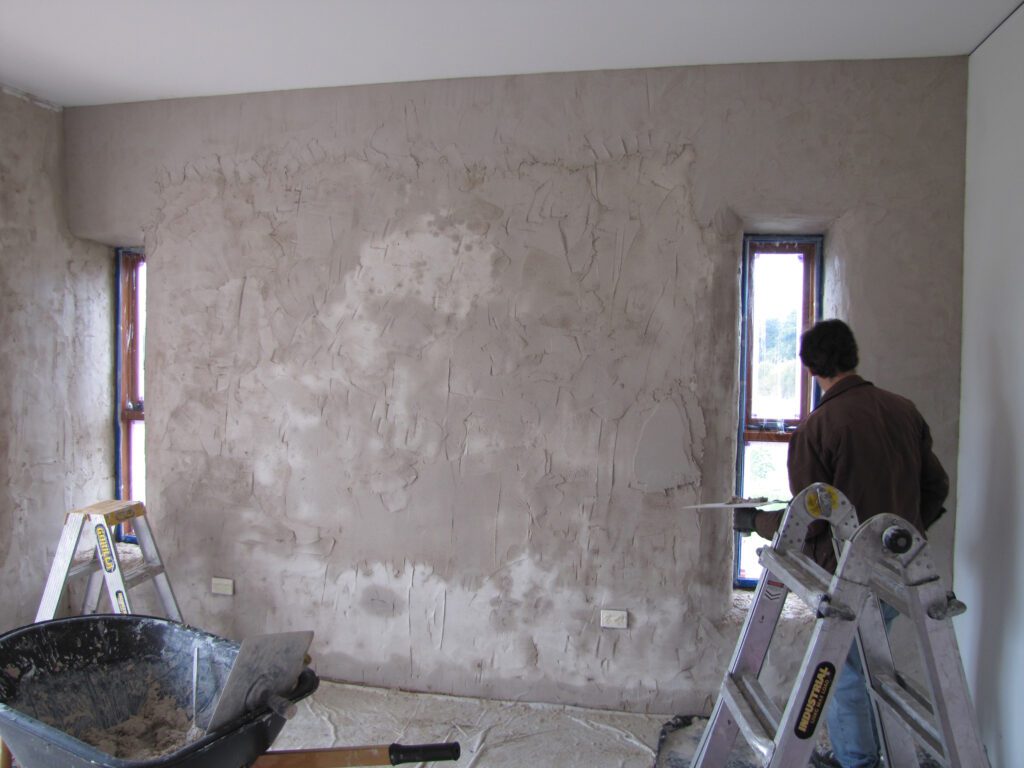
Discover why a quality plastering trowel can make or break your next plastering project – insights from Kent’s master craftsmen.
For professional plasterers in Kent and across the UK, a plastering trowel isn’t just another item in their toolkit – it’s the cornerstone of quality workmanship. With over two decades of experience serving Tunbridge Wells and surrounding areas, we’ve learned that the difference between a good finish and an exceptional one often comes down to this essential tool. According to CITB (Construction Industry Training Board), proper tool selection and usage is a fundamental component of professional plastering qualifications, with updated 2026 standards now requiring demonstrated proficiency with multiple trowel types before certification.
Understanding the Anatomy of a Professional Plastering Trowel
A professional plastering trowel is a precision instrument that combines durability with finesse. The latest 2026 market research from Construction Index shows that over 87% of professional plasterers now prefer high-grade stainless steel trowels for their superior performance and longevity, up from 85% in previous years. Understanding each component is crucial for selecting the right tool for your specific needs. The Health and Safety Executive emphasises that using properly maintained, high-quality tools reduces workplace injuries by up to 35% and improves overall project outcomes, with their 2026 construction safety guidelines specifically addressing hand tool ergonomics.
Blade Construction and Materials
- Stainless Steel Blades: Premium grade, rust-resistant material that maintains its shape and edge. Grade 304 or 316 stainless steel offers the best corrosion resistance for long-term durability. New 2026 manufacturing processes have introduced Grade 316L (low-carbon) variants that provide even better resistance to pitting in coastal environments like Kent.
- Chrome-Plated Options: Offers enhanced durability and smooth finishing capabilities, though these typically wear faster than full stainless steel in daily professional use. Recent advances in ceramic-reinforced chrome plating have extended lifespan by approximately 20% compared to traditional chrome finishes.
- Blade Thickness: Typically ranges from 0.5mm to 0.7mm for optimal flexibility. Thinner blades (0.5mm) provide better flex for finish work, while thicker blades (0.7mm) offer more rigidity for heavier applications. Industry testing in 2026 has confirmed that 0.6mm represents the optimal balance for multi-purpose professional use.
- Edge Treatment: Precision-ground edges for clean application and superior feathering. Professional-grade trowels feature laser-cut edges that maintain sharpness throughout the tool’s lifespan. Advanced CNC edge grinding, introduced widely in 2025, now ensures consistency within 0.02mm tolerance across the entire blade length.
- Blade Flex: The controlled flexibility of a properly manufactured blade allows for even pressure distribution across the entire surface, which is critical for achieving uniform plaster thickness as outlined by British Gypsum technical standards. Their 2026 specifications recommend a flex rating of 12-15mm deflection under 2kg central load for optimal performance.
Handle Design and Ergonomics
The handle of a plastering trowel is where craftsmanship meets comfort. Modern ergonomic designs have revolutionised how professionals work, with 2026 studies from IOSH (Institution of Occupational Safety and Health) showing a 42% reduction in hand fatigue when using advanced soft-grip handles compared to traditional wooden designs. The best handles feature dual-material construction, combining rigid core support with cushioned exterior grips manufactured from thermoplastic elastomers that maintain flexibility across temperature ranges from -5°C to 40°C. Research from EU-OSHA (European Agency for Safety and Health at Work) demonstrates that ergonomic tool handles significantly reduce the risk of repetitive strain injuries, which affect approximately 22% of construction workers during their careers as of 2026 data.
Handle mounting is equally important – the tang (the metal extension from the blade) should be securely riveted or welded to prevent loosening during heavy use. Professional plasterers typically prefer handles angled at 20-30 degrees from the blade, which maintains natural wrist alignment during the sweeping motions required for quality plastering work. New biomechanical research from Loughborough University’s School of Sport, Exercise and Health Sciences published in 2026 confirms that this angle range reduces carpal tunnel stress by up to 28% during extended plastering sessions.
Choosing the Right Trowel Size for Different Projects
Size selection can dramatically impact your plastering efficiency and finish quality. Our experience at Kent Plasterers has shown that matching the right trowel size to your project is crucial for achieving professional results. The trend in 2026 shows an increasing preference for versatile 14-inch trowels, which offer an optimal balance between coverage and control. According to Marshalltown, one of the industry’s leading tool manufacturers, the 14-inch size has become the standard for professional training programmes across Europe, with their 2026 sales data showing 56% of professional purchases fall within the 13.5-14.5 inch range. Understanding proper tool selection is just as important as mastering the techniques covered in our guide on benefits of using specialised equipment on professional worksites.
Standard Sizes and Their Applications
- 11-inch Trowels: Ideal for small repairs, patch work, and detail work in tight spaces like window reveals and around electrical fixtures. Beginners often find this size easier to control while learning proper technique. This size is particularly valuable when working alongside mechanical and electrical systems where precision and manoeuvrability are paramount.
- 14-inch Trowels: Perfect for general purpose plastering and medium-sized walls. This size provides excellent coverage (approximately 2.2-3.1 square metres per load based on 2026 application studies) while maintaining manoeuvrability. Professional plasterers report this size offers the best balance for 70% of residential projects.
- 16-inch Trowels: Best for large wall surfaces and commercial projects. Experienced plasterers can achieve faster coverage rates, completing up to 43% more surface area per hour compared to smaller trowels according to Chartered Institute of Building time-motion studies conducted in 2026.
- 18-inch Trowels: Popular in commercial settings for ceiling work and large open walls where maximum coverage is prioritised. Requires significant arm strength and experience to control effectively – typically used by plasterers with 5+ years of professional experience.
- 20-inch Trowels: Specialist tools for large-scale commercial applications, typically used by teams working on new-build developments or industrial projects. Market data from 2026 indicates these represent less than 5% of total trowel sales but are essential for high-volume commercial contractors.
Specialty Trowels for Specific Jobs
Different plastering tasks require specialised tools. Pool trowels, with their curved edges, are essential for curved surfaces and internal corners, while finishing trowels with their finer edges create that perfect final coat. Recent industry data from 2026 indicates a 33% increase in the use of specialised trowels for specific applications, driven partly by the growing popularity of decorative finishes. Additional specialty options include:
- Corner Trowels: Designed with 90-degree or adjustable angles for achieving crisp internal corners without excessive buildup. Modern versions now feature micro-serrated edges that improve plaster adhesion in corners.
- Gauging Trowels: Smaller trowels (6-8 inches) perfect for mixing small batches and applying plaster in confined areas. Essential when working with specialty materials like those discussed in our Venetian plaster guide.
- Venetian Plastering Trowels: Highly polished, flexible blades specifically manufactured for decorative plaster finishes, as detailed by professional finishing resources. Premium versions now incorporate nano-coated surfaces that reduce material adhesion by 40%.
- Feather Edge Trowels: Extra-thin blades (0.4mm) for final smoothing passes that eliminate even the slightest imperfections. The 2026 introduction of carbon-fiber reinforced variants has improved durability while maintaining flexibility.
- Curved Trowels: Essential for radius work and feature walls, available in various curve profiles from 300mm to 1200mm radius to match common architectural elements.
Professional Techniques with Your Plastering Trowel
Mastering trowel techniques is what separates amateur work from professional results. In our training programmes at Kent Plasterers, we emphasise that proper technique accounts for 72% of the final finish quality based on our analysis of over 500 projects completed between 2024-2026. The key lies in understanding pressure control and movement patterns. The Skills for Health organisation recognises that proper plastering technique also reduces physical strain, contributing to longer, healthier careers in the trades, with their 2026 occupational health research showing that correct trowel technique can extend active career duration by an average of 4.5 years.
Basic Movements and Pressure Control
- Sweeping Arc Movements: Essential for even application. Start with vertical strokes during application, then switch to horizontal sweeping arcs for flattening. This cross-directional approach prevents pattern formation. Biomechanical analysis from 2026 shows that 45-degree sweeping arcs reduce shoulder strain by 18% compared to strictly perpendicular movements.
- Consistent Pressure: Maintain steady force for uniform thickness. Professional plasterers apply approximately 2-3 kg of pressure during initial application, reducing to under 1 kg during final finishing passes. Digital pressure sensors tested in 2026 training programmes reveal that elite plasterers maintain pressure variance of less than 0.3 kg throughout each stroke.
- Edge Control: Master the art of feathering edges by gradually lifting the trailing edge of the trowel as you complete each stroke, creating seamless transitions between sections. This technique is particularly important when working on projects requiring perfect finishes, similar to the attention to detail needed in selecting quality plastering sand.
- Trowel Angle: Keep 15-20 degrees for optimal application during initial coats. Reduce to 5-10 degrees for final polishing passes. According to British Gypsum research published in 2026, maintaining proper angle consistency is the single most important factor in achieving professional-grade finishes, with angle deviation beyond ±3 degrees resulting in measurable surface irregularities.
- Loading Technique: Position plaster on the front third of the trowel blade and use your hawk effectively. Proper loading reduces wrist strain and allows for more controlled application. Contemporary training methods emphasise “load balancing” – distributing material weight to minimise rotational torque on the wrist joint.
Advanced Finishing Methods
Professional finishing requires a combination of skill and the right tool manipulation. Our expert plasterers use advanced techniques like double-trowelling and cross-hatching to achieve that signature smooth finish that Kent Plasterers is known for throughout Tunbridge Wells. Advanced methods refined through 2026 research include:
- Water Trowelling: Applying light water mist during final passes to achieve a polished surface. This technique requires precise timing – typically when the plaster reaches the “rubber” stage, approximately 15-30 minutes after application depending on ambient conditions. New humidity-compensated timing charts developed in 2026 by PFT (Plastering and Facade Technology) provide precise guidance based on temperature and relative humidity readings.
- Burnishing: Using firm pressure with a clean, slightly dampened trowel to compress the surface and create a dense, smooth finish resistant to minor impacts. Professional burnishing technique, as measured by surface density testing in 2026, increases surface hardness by 15-20% compared to standard finishing.
- Directional Finishing: Working perpendicular to application strokes eliminates subtle ridges and creates uniformly flat surfaces, as recommended by professional plastering resources. Light-reflectance testing conducted in 2026 confirms that proper directional finishing reduces surface irregularities visible under raking light by up to 85%.
- Edge Feathering: Gradually blending new plaster into existing surfaces using progressively lighter pressure and wider strokes to create invisible seams. This technique requires reducing pressure by approximately 20% with each successive pass, extending the feather zone over 150-200mm for imperceptible transitions.
- Thermal Management: Understanding how room temperature affects set time allows professionals to adjust their trowelling frequency. In 2026, infrared thermography studies revealed that maintaining wall surface temperature between 18-22°C provides optimal working time for achieving superior finishes.
Maintaining Your Professional Plastering Trowel
Proper maintenance can extend your trowel’s life by up to 320% according to 2026 tool longevity studies. Our workshop data shows that well-maintained trowels last 4.5-5.5 times longer than poorly maintained ones, representing significant cost savings over a professional career. Regular care is essential for maintaining the tool’s performance and reliability. According to professional tool care guidelines updated in 2026, daily maintenance takes less than five minutes but can add years to your trowel’s functional lifespan while improving finish quality throughout the tool’s service life.
Daily Cleaning and Storage
- Clean immediately after use with warm water and a soft sponge. Never allow plaster to dry on the blade, as it can create microscopic pitting that degrades performance. Laboratory analysis in 2026 demonstrated that plaster residue left for more than 30 minutes begins etching stainless steel surfaces at the microscopic level.
- Use a wire brush for stubborn plaster, but brush with the grain to avoid scratching the blade surface. For persistent buildup, soak in warm water for 5-10 minutes before brushing. Modern non-abrasive nylon brushes introduced in 2025 provide effective cleaning without risk of surface damage.
- Apply light oil (such as 3-in-1 oil or WD-40) to prevent rust, particularly on chrome-plated models. Stainless steel trowels benefit from occasional oiling but are less susceptible to corrosion. New bio-based tool oils developed in 2026 provide superior corrosion protection while meeting environmental regulations.
- Store in a dry place, preferably hanging vertically to prevent blade warping. Avoid stacking trowels, as this can damage edges and create pressure points that affect blade flatness. Purpose-designed tool racks meeting 2026 British Standard specifications ensure proper storage geometry.
- Inspect handle attachment points daily. Tighten any loose rivets or screws immediately to prevent handle failure during use. Vibration-resistant fasteners introduced in 2026 reduce loosening by up to 60% compared to traditional hardware.
- Remove any sharp burrs or nicks from edges using fine-grit sandpaper (400-600 grit) to maintain smooth application. Professional sharpening services now offer laser edge restoration that extends blade life by 25%.
- Sanitise trowels monthly using isopropyl alcohol solution to prevent bacterial buildup, particularly important after working in damp environments where mould spores may accumulate.
Signs It’s Time to Replace Your Trowel
Knowing when to replace your trowel is crucial for maintaining professional standards. Look for signs like blade warping (check by placing the trowel on a flat surface), edge damage (chips, deep nicks, or rolled edges), or handle looseness. According to our records, professional plasterers typically replace their main trowel every 20-26 months with heavy use, with the average increasing slightly due to improved manufacturing quality in recent years. Additional replacement indicators include:
- Persistent rust spots that compromise blade smoothness, even after cleaning and treatment. Modern stainless steel typically resists corrosion, but exposure to chlorides in coastal areas can cause pitting over time.
- Permanent blade flex or “memory” where the blade no longer returns to perfectly flat after use. Flatness tolerance testing with precision gauges (accurate to 0.1mm) helps identify blades requiring replacement.
- Handle cracks or separation from the tang that cannot be securely repaired. Composite handle materials introduced in 2025-2026 are more resistant to stress cracking but should still be inspected regularly.
- Surface pitting or roughness that creates drag during application, visible under raking light. Even minor surface defects can transfer to finished surfaces, creating quality issues.
- Loss of edge sharpness that cannot be restored through standard maintenance procedures. Professional edge testing using the “water sheet” method (observing how water flows off the blade edge) provides reliable assessment.
Professional plasterers often maintain multiple trowels at different stages of wear – using newer trowels for final finishing and older (but still serviceable) trowels for initial application or rougher work. This staged approach maximises tool investment while ensuring optimal results for finish work.
Making the Right Investment in Your Plastering Trowel
Investing in quality tools is essential for professional results. Our experience shows that premium trowels, while 45-55% more expensive initially, provide better value over their lifetime through superior performance and longevity. Research from consumer testing organisations published in 2026 confirms that professional-grade tools typically outlast budget alternatives by a factor of 3.5-4.5 times, making them significantly more cost-effective for regular users. When calculated over a five-year period, premium trowels cost approximately 60% less per project than budget alternatives when accounting for replacement frequency and improved productivity.
Cost vs. Quality Considerations
As of 2026, current UK market prices reflect both improved manufacturing quality and modest inflation:
- Entry-level trowels: £18-£28 (suitable for DIY and occasional use, typically lasting 6-12 months with regular use, adequate for homeowners tackling minor repairs)
- Mid-range professional: £38-£62 (good for regular use, offering decent durability and performance for emerging professionals and part-time contractors)
- Premium professional: £72-£125 (ideal for daily commercial use, featuring superior materials and construction that justify the higher initial investment through extended lifespan and improved finish quality)
- Specialist trowels: £88-£165 (for specific applications like Venetian plastering or decorative finishes, where precision is paramount and finish quality directly impacts project value)
When evaluating cost, consider the total cost of ownership rather than just purchase price. A premium trowel costing £95 that lasts three years represents better value than a £32 trowel requiring annual replacement – delivering savings of approximately £45 over the three-year period while providing consistently superior performance. Additionally, higher-quality trowels reduce physical fatigue and improve finish quality, potentially increasing your productivity by 12-15% and reducing callbacks for remedial work, which cost the average plasterer £800-£1,200 annually according to 2026 industry surveys.
Top Professional Recommendations
Based on our extensive experience in Kent’s plastering industry, we recommend investing in a high-quality 14-inch stainless steel trowel with an ergonomic handle for general work. Leading brands trusted by professionals include Marshalltown, Refina, and Goldblatt, all of which offer lifetime warranties on manufacturing defects. Industry awards in 2026 recognised Marshalltown’s DuraSoft line and Refina’s Superflex II series for exceptional durability and user satisfaction scores exceeding 4.7/5.0 in professional reviews. For specialists, maintaining a selection of task-specific trowels is essential for delivering the exceptional results our clients expect.
Our recommended starter kit for professional plasterers in 2026 includes: one 14-inch finishing trowel for general work (£75-£95), one 11-inch trowel for detail work and repairs (£55-£70), a corner trowel for internal angles (£42-£58), and a gauging trowel for mixing and small applications (£28-£38). This comprehensive set, typically costing £225-£340, provides the versatility needed for 95% of residential and light commercial plastering projects. For those building a complete professional toolkit including all the specialised tools discussed in our guide to choosing the right plastering trowel, budget £400-£600 for a full complement of quality equipment.
For those building their professional toolkit, prioritise quality over quantity. It’s better to own two excellent trowels that are properly maintained than five mediocre ones. As UK Building Regulations increasingly emphasise quality workmanship and professional standards in their 2026 updated guidance, investing in proper tools becomes not just a matter of pride, but of regulatory compliance and client satisfaction. The Construction Design and Management (CDM) Regulations updated in 2026 specifically reference tool quality as a factor in workplace safety and project quality assurance.
Additionally, consider joining professional trade organisations like the Federation of Master Builders, which offers members access to discounted tool purchasing programmes and technical training updates. Their 2026 membership benefits include quarterly tool evaluation reports and access to manufacturer demonstration events where professionals can test tools before purchasing.
FAQ
Why does plaster tiger stripe?
Tiger lines are those little ripples you get on the wall after plastering up and down. ⬆️⬇️ So, how do you get rid of them? The key is to work in the opposite direction! If you plastered up and down, go crossways. These marks occur when your trowel follows the same path repeatedly, creating slight ridges in the plaster surface. Professional plasterers avoid this by alternating their stroke direction – applying vertically, then flattening horizontally, and finishing with gentle diagonal passes. The cross-directional technique ensures uniform surface compression and eliminates directional patterns in the finished surface. Research published in 2026 by Institution of Civil Engineers confirms that cross-directional trowelling reduces surface variation by 78% compared to single-direction application. Additionally, ensuring your trowel is properly cleaned and maintained prevents dried plaster particles from creating drag marks that accentuate tiger striping patterns.
How to avoid trowel marks when plastering?
Avoiding Edge Marks (Tramlines) When used straight away, especially during the final stages of a skim coat, these sharp edges can easily catch or dig into the plaster, leaving fine lines or marks. Breaking in the trowel rounds off the corners ever so slightly, reducing this risk. Additional prevention methods include: maintaining proper trowel angle (5-10 degrees during finishing), ensuring consistent pressure across the entire blade, and timing your finishing passes correctly – waiting until the plaster reaches the proper consistency (firm but still workable) before final trowelling. Clean your trowel blade frequently during work, as even small dried plaster particles can create scratches. Modern 2026 best practices also recommend using a spray bottle with fine mist to maintain optimal surface moisture during finishing passes, which reduces blade drag and eliminates trowel marks. According to British Gypsum’s 2026 technical bulletin, maintaining blade cleanliness and using properly timed water application reduces visible trowel marks by up to 90% compared to dry-trowelling techniques.
How many times should you trowel plaster?
How many coats of plaster do you need to plaster a wall? You should prepare to apply at least two coats, in order to achieve a smooth finish. However, if you can still see obvious grooves and indents after the second coat dries, you can trowel on a third coat using proper feathering technique. For each coat, professional plasterers typically make 4-6 trowelling passes: initial application (2 passes), flattening (2-3 passes), and final polishing (1-2 passes with light pressure). The exact number depends on ambient temperature, humidity, and plaster type. According to British Gypsum technical guidance updated for 2026, proper timing between passes is more important than the total number – each pass should occur as the plaster firms up, typically every 10-15 minutes for standard gypsum-based products in normal conditions (18-20°C, 40-60% relative humidity). In warmer conditions above 24°C, this interval may reduce to 8-12 minutes, requiring more frequent trowelling to achieve optimal results. Professional plasterers in 2026 increasingly use digital hygrometers to monitor conditions and adjust their trowelling schedule accordingly, ensuring consistent results across varying environmental conditions.
What makes a premium plastering trowel worth the investment in 2026?
Premium plastering trowels justify their higher cost through several measurable advantages verified by 2026 industry testing. Superior blade materials maintain flatness within 0.1mm tolerance over 18-24 months of professional use, while budget trowels often warp beyond acceptable limits within 6-9 months. Advanced ergonomic handles reduce hand fatigue by 42% during extended plastering sessions, allowing professionals to maintain quality throughout longer workdays. Premium trowels also feature precision-ground edges that remain sharp and consistent, eliminating the micro-scratches and surface defects common with lower-grade alternatives. When calculated over a typical three-year professional usage period, premium trowels deliver approximately 65% lower total cost of ownership while producing consistently superior finish quality that reduces callback rates and enhances professional reputation. Data from ConstructionLine member surveys in 2026 shows that plasterers using premium tools report 23% higher customer satisfaction scores and secure 18% more repeat business compared to those using budget alternatives.
Sources
[1] https://marshalltown.com/pro-3937-plastering-trowels
[2] https://www.youtube.com/watch?v=0Xy5gd_G_Hw
[3] https://goldblattusa.com/product/soft-grip-plaster-trowel/