
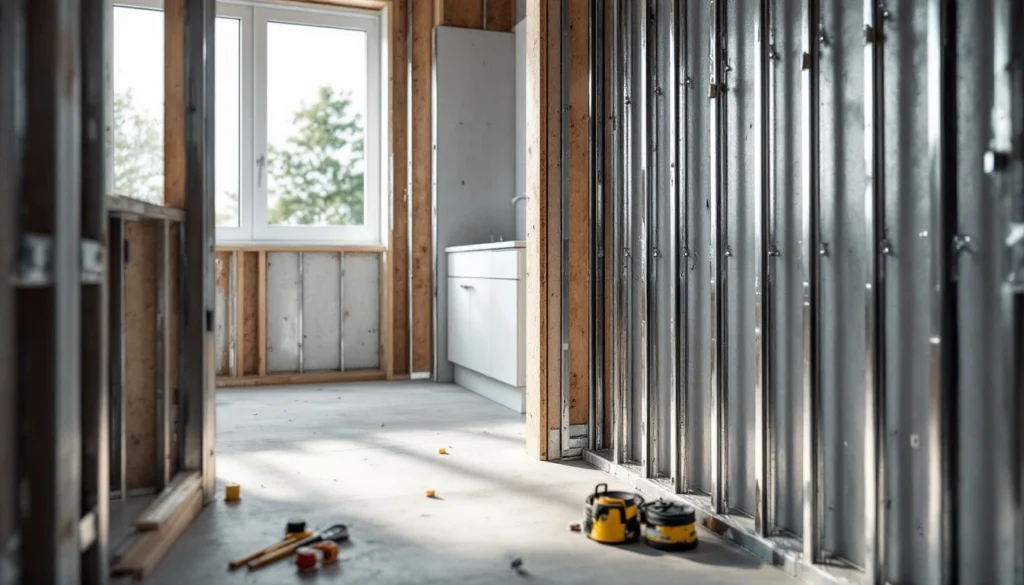
Waterproof Plasterboard: The Complete Guide for Wet Rooms and Bathrooms
Quick Answer: Waterproof plasterboard (often called moisture-resistant or MR board) is essential for bathrooms and wet rooms, but it’s NOT fully waterproof. British Gypsum’s Gyproc Moisture Resistant board is the UK standard, offering enhanced water resistance through water-repellent additives and a green paper face. For true wet areas like shower enclosures, you’ll need 12.5mm MR board plus tanking membrane or cement backer board. Expect to pay £8-12 per sheet versus £5-7 for standard board, with installation costs of £35-50/m² including materials and labour. What Is Waterproof Plasterboard and How Does It Work? Let’s clear up some confusion straight away: what tradesmen call “waterproof plasterboard” isn’t actually waterproof in the technical sense. The correct term is moisture-resistant plasterboard (MR board), and it’s designed to resist moisture exposure better than standard board, not to be completely impervious to water. Standard plasterboard consists of a gypsum plaster core sandwiched between two layers of paper liner. When water penetrates this, the gypsum core absorbs moisture, the paper delaminates, and the board essentially falls apart. You’ve probably seen the damage yourself — sagging ceilings, crumbling walls, and that distinctive brown water staining. Moisture-resistant plasterboard addresses this problem through two key modifications: Water-repellent additives mixed into the gypsum core that reduce water absorption by up to 95% compared to standard board Green-faced paper liners (or sometimes blue) that are treated with silicone or wax to repel water rather than absorbing it Enhanced core density that provides better structural integrity when exposed to humidity Reduced edge absorption through sealed or treated edges on quality products The most common product you’ll find in UK builders’ merchants is British Gypsum’s Gyproc Moisture Resistant board, identifiable by its distinctive green paper face. Knauf also produces a competing product called Aquapanel, though this is a cement-based board rather than gypsum. Moisture-Resistant vs. Standard Plasterboard: The Real Differences Feature Standard Plasterboard Moisture-Resistant Board Paper colour Ivory/cream Green (occasionally blue) Water absorption Up to 25% by weight Less than 5% by weight Price (per 2400x1200mm sheet) £5-7 £8-12 Suitable locations Living rooms, bedrooms, offices Bathrooms, kitchens, utility rooms Direct water contact Not suitable Requires additional tanking BS standards compliance BS EN 520 Type A BS EN 520 Type H1 The key takeaway: MR board handles humidity and occasional splashes brilliantly, but it’s not designed for constant water contact. That’s where additional waterproofing measures come in, which we’ll cover shortly. Building Regulations and British Standards for Bathroom Plasterboard When you’re working on bathrooms and wet rooms, you’re not just making aesthetic choices — you’re working within a framework of regulations designed to prevent structural damage and mould growth. Building Regulations Part F (Ventilation) sets out requirements for moisture control in habitable rooms and wet areas. In practical terms, this means your bathroom needs adequate ventilation — typically an extractor fan with a minimum extraction rate of 15 litres per second for bathrooms. For the plasterboard itself, you need to comply with BS EN 520, which classifies plasterboard types. Type H1 boards (moisture-resistant) are the minimum acceptable standard for bathroom walls and ceilings that aren’t in direct water contact. Type H2 and H3 boards offer even higher moisture resistance but are rarely available in standard builders’ merchants. Pro Tip: Always check the batch code on your MR board before installation. British Gypsum boards should have a green face with the Gyproc logo stamped every 300mm. Counterfeit or incorrectly stored boards (which may have absorbed moisture in the warehouse) won’t perform as specified. If the board feels unusually heavy or the edges look swollen, reject it. For wet rooms and shower enclosures specifically, you’ll also need to consider BS 8000-11.1, which covers internal wall and floor tiling. This standard requires a waterproofing system behind tiles in areas subject to water jets or pooling water — MR board alone won’t cut it. Where Should You Use Moisture-Resistant Plasterboard? Not every room needs the expense of MR board, and knowing where to specify it will save your clients money without compromising performance. Here’s the breakdown based on 20+ years of real-world installations: Always Use MR Board: Bathroom walls and ceilings — even areas away from direct water contact benefit from the humidity resistance Shower enclosure surrounds — but only as a substrate under tanking membrane, never as the final waterproof layer Behind bathroom sinks and basins — splashbacks see constant moisture exposure Utility room walls — washing machines and tumble dryers generate significant humidity Kitchen walls adjacent to sinks and cookers — steam from cooking and washing creates a high-moisture environment Unheated spaces — garages and outbuildings where condensation is common Standard Board Is Fine: Bedroom walls and ceilings (unless the room has an en-suite without a door) Living rooms and dining areas Hallways and staircases Home offices and studies Special Consideration Areas: Loft conversions with bathrooms: Use MR board throughout the bathroom, but pay particular attention to ventilation. Poor airflow in loft spaces can trap moisture even with the best boards. Below-ground rooms: Basements and cellars may need tanking on the external walls regardless of plasterboard type. MR board doesn’t stop damp penetration from outside — you need proper tanking for that. For more guidance on bathroom renovations and layout considerations, our en-suite bathroom ideas guide covers design principles that work with moisture-resistant drylining systems. Installation Standards for Waterproof Plasterboard Installing MR board follows the same basic principles as standard board, but there are critical differences that affect long-term performance. Get these wrong and you’ll be back to repair water damage within 18 months. Board Thickness and Spacing For bathroom walls, always use 12.5mm board as a minimum. Some tradesmen try to save money with 9.5mm board, but the thinner profile absorbs moisture more readily and provides less structural support for heavy tiles. Stud spacing should be maximum 400mm centres for 12.5mm board, or 600mm for horizontal fixing with adequate noggings. In wet areas, I actually recommend 400mm centres regardless — the extra timber costs £20-30 but massively improves rigidity when tiling. Fixing and Joints Use
Waterproof Plasterboard: The Complete Guide for Wet Rooms and Bathrooms Read More »