
The chemical formula of plaster of paris is CaSO4·½H2O, calcium sulphate hemihydrate. It is made by heating gypsum (CaSO4·2H2O) to around 150°C, which drives off three quarters of the water bound in the crystal. Mix the powder with water and it rehydrates back into solid gypsum, which is why it sets hard within minutes.
Key facts
- Chemical name: calcium sulphate hemihydrate, formula CaSO4·½H2O (also written 2CaSO4·H2O)
- Made by heating gypsum (CaSO4·2H2O) to about 150°C in a kiln
- Starts to set about 10 minutes after mixing, hard in under an hour
- Setting is exothermic, so the mix gives off heat as it hardens
- Setting turns it back into gypsum, with a slight expansion that captures fine mould detail
What is the chemical formula of plaster of paris?
Plaster of paris is calcium sulphate hemihydrate. “Hemihydrate” means each calcium sulphate unit holds half a molecule of water in its crystal structure, so the formula is written CaSO4·½H2O. You will also see it written as 2CaSO4·H2O, which is the same thing expressed as two calcium sulphate units sharing one water molecule.
It is a fine white powder with a molar mass of about 145 g/mol. The name comes from the huge gypsum deposits at Montmartre in Paris, which supplied the raw material for centuries.
How is plaster of paris made?
Plaster of paris is made by calcining gypsum. Gypsum rock is crushed, then heated in a kiln at roughly 120 to 180°C, with about 150°C being typical. The heat drives off three quarters of the chemically bound water as steam:
CaSO4·2H2O → CaSO4·½H2O + 1½H2O
gypsum, heated to about 150°C, becomes plaster of paris plus water vapour
In whole numbers the same equation reads 2(CaSO4·2H2O) → 2(CaSO4·½H2O) + 3H2O.
Temperature control matters. Heat gypsum above about 200°C and it loses all its water, leaving anhydrite (CaSO4), known in the trade as dead burnt plaster. Anhydrite takes up water again so slowly that it is useless as a quick-setting plaster.
What is the setting reaction of plaster of paris?
Setting is the manufacturing reaction in reverse. The hemihydrate takes water back into its crystal structure and turns into gypsum again:
CaSO4·½H2O + 1½H2O → CaSO4·2H2O + heat
When you mix the powder with water it partly dissolves, then recrystallises as a mesh of interlocking needle-shaped gypsum crystals. That crystal mesh is what makes set plaster rigid. The set material also expands very slightly (well under 1 per cent), which is why plaster of paris picks up fine detail so well in moulds.
The reaction is exothermic. A cupful gets noticeably warm, and a large solid mass can get genuinely hot. Never cast a hand or foot directly in a tub of plaster of paris. The trapped heat in bulk plaster has caused serious burns.
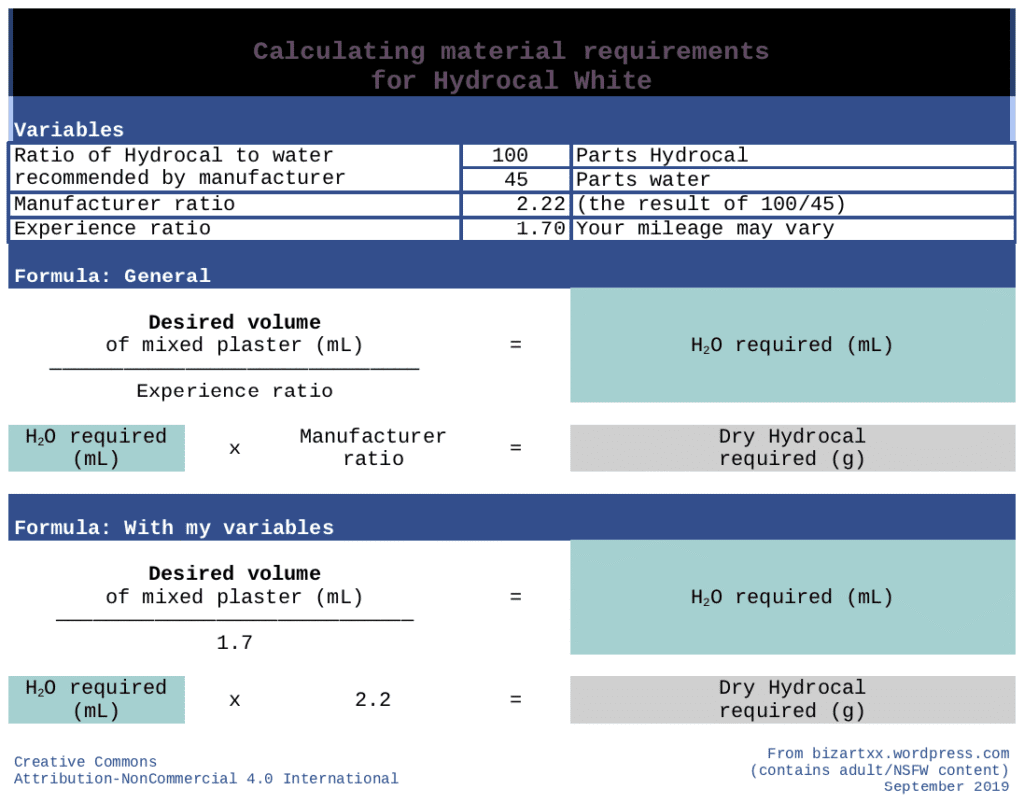
Chemically, 100 g of plaster only needs about 19 g of water to set. In practice you mix roughly 2 parts plaster to 1 part water by weight so the mix flows, and the spare water evaporates later, leaving the set plaster slightly porous. Always add the powder to the water, not the other way round. Our guide on how to mix plaster covers the technique step by step.
You can work the mix for about 10 minutes. It is firm within 30 to 60 minutes, but full strength comes only once the excess water has evaporated, which takes days. See how long plaster takes to dry for realistic timescales.
Is plaster of paris the same as gypsum?
No. Gypsum is calcium sulphate dihydrate (CaSO4·2H2O) and plaster of paris is the hemihydrate (CaSO4·½H2O). They are the same compound carrying different amounts of water. Plaster of paris is made from gypsum, and it turns back into gypsum when it sets.
| Material | Formula | Water in crystal | Behaviour |
|---|---|---|---|
| Gypsum | CaSO4·2H2O | 2 molecules per unit | Stable solid, the raw material and the set end product |
| Plaster of paris | CaSO4·½H2O | ½ molecule per unit | Sets hard in minutes when mixed with water |
| Anhydrite | CaSO4 | None | Over-burnt (above 200°C), rehydrates too slowly to be useful |
The full cycle is simple: gypsum plus heat gives plaster of paris, plaster of paris plus water gives gypsum again.
What is plaster of paris used for?
Its fast set, fine detail and clean white finish make plaster of paris useful well beyond the building trade:
- Moulds and casting for ceramics, metalwork patterns and prototypes
- Fibrous plasterwork such as cornice, coving and ceiling roses
- Orthopaedic casts, although fibreglass has largely replaced it in UK hospitals
- Sculpture and art, both for casting and direct modelling
- Small repair fills where a fast-setting patch is handy
Modern bagged wall plasters such as multi-finish use the same hemihydrate chemistry, with retarders added to stretch the 10 minute set to an hour or more so a full wall can be worked. Our guide to the types of plaster explains which product suits which job, and there is more practical advice in our post on what plaster of paris is and when to use it.
One limit to remember: gypsum is slightly soluble in water, so plaster of paris is a poor choice for damp rooms or anywhere outdoors. If a repair is bigger than a small patch, our plasterers in Kent can take a look and quote for the proper job.
Frequently asked questions
What is the chemical formula of plaster of paris?
The formula is CaSO4·½H2O, calcium sulphate hemihydrate. Each calcium sulphate unit holds half a molecule of water in its crystal structure. Chemists sometimes write it as 2CaSO4·H2O, which describes exactly the same compound as two units sharing one water molecule.
How is plaster of paris made?
It is made by heating crushed gypsum (CaSO4·2H2O) in a kiln at around 150°C. The heat drives off three quarters of the chemically bound water, leaving the hemihydrate powder. Overheating past 200°C removes all the water and produces anhydrite, which sets too slowly to be useful.
Is plaster of paris the same as gypsum?
No. Gypsum is the dihydrate, CaSO4·2H2O, while plaster of paris is the hemihydrate, CaSO4·½H2O. Plaster of paris is manufactured by heating gypsum, and when you mix it with water it sets by turning back into gypsum.
What is plaster of paris used for?
Its main uses are moulds and casting, fibrous plasterwork such as cornice and ceiling roses, orthopaedic casts, sculpture, and quick-setting repair fills. It suits detailed work because it expands very slightly as it sets, pressing the plaster into every corner of a mould.
What is the setting reaction of plaster of paris?
The setting reaction is CaSO4·½H2O + 1½H2O → CaSO4·2H2O plus heat. The powder rehydrates and recrystallises as interlocking gypsum crystals, which is what makes the set plaster rigid. The reaction gives off heat and the material expands slightly as it hardens.
Can you plaster a wall with plaster of paris?
Only for small patch repairs. Neat plaster of paris starts to set in about 10 minutes, far too fast to work across a full wall. Bagged wall plasters use the same chemistry with retarders added to give an hour or more of working time, so use those for larger areas.