
When people think about home repairs, they most likely separate structure from style. They think about the base of the house and the pretty finishes inside as two different things. However, these are closely connected. Foundation repair directly impacts your walls, ceilings, plaster, and flooring; if the home’s base shifts, everything above it responds. That’s why it is important to understand how structural work and interior finishes go hand in hand.
Fixing cracks in plaster without addressing the root cause is like painting over a leak. It may look good for a while, but the problem will come back. Bluebird CFW, a Michigan-based foundation repair company, has shown time and time again that stabilizing a home’s base changes everything that happens inside. Once the structure is secure, real interior restoration can begin properly.
The Role of a Strong Foundation
Your foundation is your home’s backbone. It supports the weight of the walls, the floors, and the roof. Every beam and joist depends on staying stable. When the foundation is level and secure, everything above it remains aligned. But when it shifts, the house reacts. Walls may begin to crack, and doors might stick.
These aren’t random cosmetic flaws. They’re signs that the structure beneath is moving. Early warning signs usually appear inside the home first, such as hairline cracks in plaster and small gaps growing between skirting boards and floors. You might also notice diagonal cracks near doors or windows, or tiny separations where walls meet ceilings. The foundation does not fall overnight. It shows signs.
Common Foundation Problems That Affect Interior Finishes
Foundation problems have many causes. When one or more of these is at play, you’ll likely notice small signs of damage spreading throughout your home.
Settlement and Uneven Load Distribution
Settlement happens when soil beneath the foundation shifts. This occurs naturally over time, often due to drainage problems and poor soil conditions. When one part of the foundation sinks slightly, weight redistributes across the structure. That uneven load puts pressure on walls and ceilings and can cause cracks in plaster, uneven floors, and gaps around the window frame inside the house. Plaster is strong, but it is not flexible; when the structure beneath it moves, it starts to crack.
Foundation Cracks and Structural Shifts
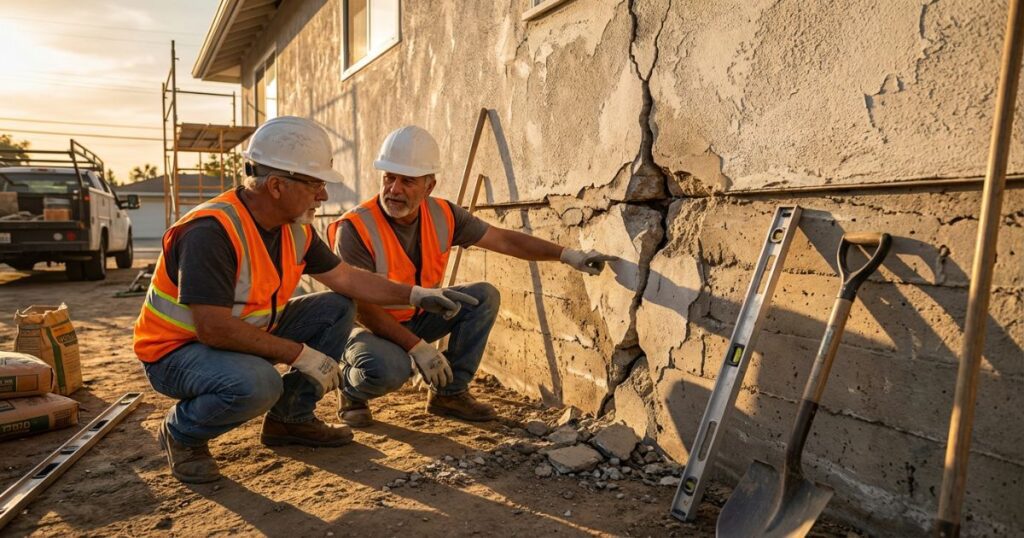
Foundation cracks are another major issue. Not all cracks are serious, but structural cracks can signal shifting or stress within the base of the home. When the foundation shifts horizontally or vertically, the framing above responds. Studs may twist slightly, or joists may adjust. That movement travels up into plastered surfaces. You may notice stair-step cracks, diagonal damage, or even separation near the ceiling. These aren’t surface problems; they’re signs of deeper movement. If you repair the plaster but don’t address the foundation problems, you’ll likely deal with cracks reopening quickly.
Moisture Intrusion and Rising Damp
Moisture is one of the most damaging forces in any home. When foundation walls allow water intrusion, moisture can travel upward into floors and walls. This weakens plaster from behind, causing bubbling, flaking, and staining. You might notice peeling paint, crumbling plaster, soft spots, or musty smells. Moisture also supports mold growth, which creates health concerns. That’s why structural repairs frequently include waterproofing or improvement in drainage systems.
Best Practices for Restoring Interior Finishes After Foundation Repair
Interior restoration can proceed after foundation stabilization. The first step is to check all visible cracks and damage. Some may only need filling, and others may require more plastering work. Flexible fillers are often used for minor cracks, but for larger damaged areas, sections of plaster may need to be removed and re-applied. Loose materials must be scraped away, dust must be cleaned off, and primers need to be applied where necessary.
Skipping preparation leads to poor adhesion and uneven finishes. For damp-affected walls, allow proper drying time before replastering; rushing this stage traps moisture behind new finishes. Once foundation repairs are complete, repainting or refinishing can restore the home’s appearance. Take this stage seriously—good craftsmanship ensures repairs blend seamlessly into existing surfaces.
How Professional Foundation Repair Protects Interior Finishes
Structural experts understand how the building works as a whole. They don’t just fix cracks in concrete. They understand the root causes and fix the entire system. They’ll check soil conditions, drainage patterns, structural loads, and more to determine if these are the problems or not. Following that, they’ll recommend and perform specific solutions to prevent further damage. When complete, your home will be more stable, and your interior finishes will last longer.
Conclusion
Foundation issues don’t stay hidden below ground. They rise into your walls, ceilings, and floors. Cracks in plaster are often messages from the underlying structure, and by learning what to look for, you’re educating yourself about when to call a professional.
Solid foundations support more than walls. They protect every finish inside your home. When repairs are done in the right order, your home becomes stronger and more beautiful at the same time.