
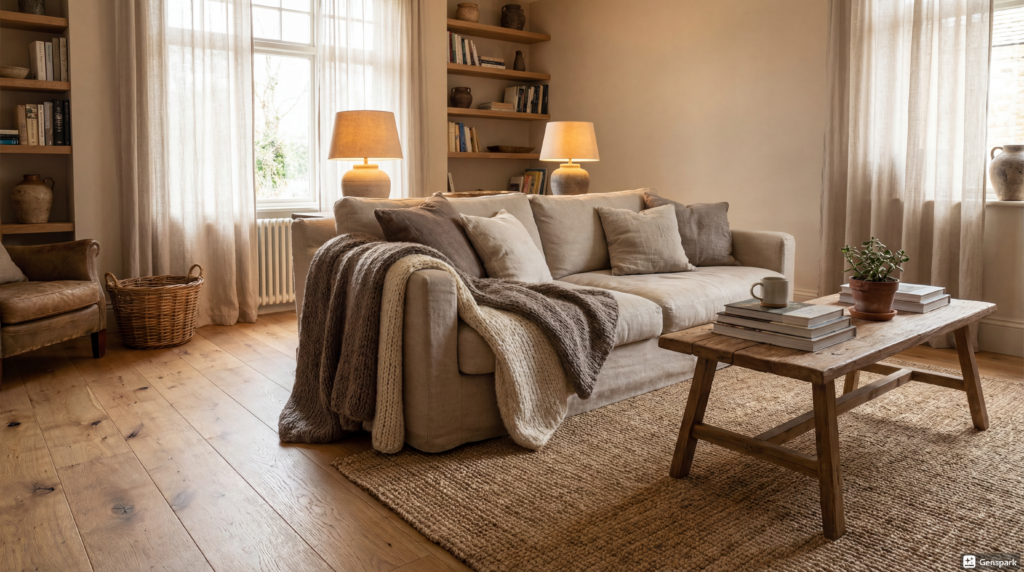
For years, interiors chased polish. High-gloss finishes, pristine palettes and hotel-like perfection dominated inspiration feeds.
Homes looked impressive, but often felt untouchable. Now, a quieter shift is taking place; one that prioritises warmth, ease and emotional comfort over visual status.
“Cosy over luxury” is redefining what a beautiful home looks like. Instead of spaces designed to impress guests, homes are being shaped around how they feel to live in.
Softness is replacing sharpness, and comfort is becoming the new marker of quality. This shift isn’t about rejecting good design—it’s about redefining luxury itself.
What Does “Cosy Over Luxury” Actually Mean?
Cosy interiors focus on sensory comfort rather than visual drama. They feel inviting, lived-in and grounding, without appearing cluttered or careless.
This approach favours several key elements:
- Soft, touchable textures and warm, natural colour palettes
- Furniture chosen for comfort, not just aesthetics
- Materials that age gracefully rather than demand perfection
Luxury, in this context, isn’t removed; it’s softened. Think quality wool throws instead of statement marble, or characterful timber flooring instead of glossy tiles that show every mark.
The result is a home that feels welcoming at any time of day, not just camera-ready.
Why the Shift Away from Traditional Luxury?
Several cultural and lifestyle changes are fuelling this move towards cosier interiors.
| Driver | Impact on Home Design |
|---|---|
| Homes are being lived in harder | Spaces need to support working, resting, socialising and unwinding all in the same footprint. Comfort has become essential, not optional. |
| Perfection fatigue is real | Highly curated interiors feel intimidating. People want spaces that feel human, forgiving and personal. |
| Emotional wellbeing influences design | Warmth, softness and familiarity support rest and emotional regulation in ways stark luxury doesn’t. |
| Longevity is valued over trends | Natural materials and neutral warmth don’t date as quickly as high-shine trends. |
How Flooring Sets the Foundation for Cosy Living
Flooring plays a bigger role in cosy design than many realise. It’s one of the largest visual and tactile surfaces in the home, shaping both atmosphere and comfort underfoot.
Cosy-first interiors often lean towards these flooring characteristics:
- Warm-toned wood flooring that adds instant softness and depth
- Brushed or matt finishes, rather than high-gloss surfaces
- Natural grain and variation, allowing floors to feel characterful rather than uniform
Engineered wood works particularly well here, offering the warmth of real timber with added stability for modern living.
Even in contemporary homes, softer oak tones or subtly textured finishes help balance clean architecture with comfort. Luxury vinyl and laminate are also being used more thoughtfully, chosen in realistic, warm finishes that feel practical without looking clinical.
How to Create a Cosy-First Interior at Home
Cosy interiors don’t rely on one big design gesture. They’re built through layers and thoughtful choices.
- Start with warmth: Choose colours with warmth in them, like soft neutrals, muted browns, warm greys and earthy tones. Avoid stark whites or cold greys if comfort is the goal.
- Embrace texture: Layer materials such as wool, linen, timber and ceramic. Texture creates visual interest without needing bold patterns or high contrast.
- Prioritise comfort in furniture: Deep sofas, upholstered chairs and relaxed seating layouts encourage lingering rather than formal sitting.
- Let materials show character: Natural imperfections, such as knots in wood, uneven glazes, and visible grain, add depth and make a space feel more human.
- Use lighting to soften the mood: Warm bulbs, table lamps and layered lighting create intimacy, especially in the evenings.
Is “Cosy Over Luxury” Right for Every Home?
This trend suits those who value atmosphere over status and comfort over display. It works especially well in family homes, open-plan spaces and period properties where warmth enhances character.
That said, cosy doesn’t mean careless. Balance is key.
Clean lines, considered layouts and quality materials prevent spaces from tipping into messy or dated territory.
For those who love luxury finishes, the shift doesn’t require abandoning them entirely. Instead, it’s about softening the overall feel, pairing refined elements with warmth and approachability.
A New Definition of Luxury
The rise of “cosy over luxury” reflects a broader mindset change. Homes are no longer expected to perform as showpieces—they’re expected to support real life.
True luxury now looks like:
- Spaces that feel calm at the end of the day
- Floors that are comfortable to walk on barefoot
- Rooms that invite people to stay, not just admire
In modern interiors, comfort has become the most desirable upgrade of all. It’s proving that cosy can be just as considered, stylish and timeless as traditional luxury.