
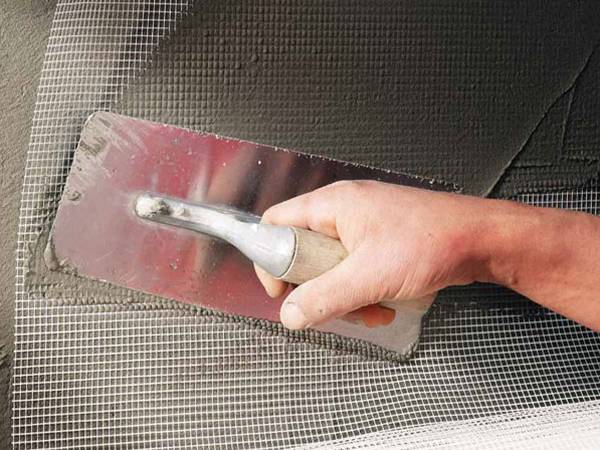
Plastering mesh is a reinforcement layer bedded into plaster or render to stop it cracking. Use 50mm fibreglass scrim tape on plasterboard joints, expanded metal lath (EML) over timber and mixed backgrounds, and 160g/m² alkali-resistant render mesh in external basecoats. For cracks in old plaster, a strip of mesh bedded into the skim coat stops the crack reopening through the new finish.
Key facts
- Scrim tape is 50mm self-adhesive fibreglass mesh, around £3 to £5 for a 90m roll
- EML (expanded metal lath) is galvanised steel sheet, fixed at 100 to 150mm centres with 25mm overlaps
- Render mesh is alkali-resistant fibreglass, usually 160g/m², bedded into the wet basecoat
- Mesh goes in the plaster, not behind it. Bed it into the first coat
- Scrim every plasterboard joint before skimming, but never over screw heads
What is plastering mesh for?
Plaster and render are strong in compression but weak in tension. When the background moves, because timber shrinks, boards flex or two different materials meet, the plaster gets pulled apart and a crack opens.
Mesh takes that tension instead of the plaster. Bedded into the coat, it spreads movement across a wider area so it never concentrates into a single visible line. Background movement is the main reason plaster cracks along board joints and above door frames.
Mesh will not fix structural movement. If a crack keeps opening, is wider than 5mm or steps across brickwork, get the cause looked at before you replaster.
Which type of plastering mesh do you need?
| Mesh type | What it is | When to use it |
|---|---|---|
| Fibreglass scrim tape | 50mm self-adhesive mesh tape, sold in 45m and 90m rolls | Plasterboard joints, hairline cracks and patch repairs before skimming |
| EML (expanded metal lath) | Galvanised steel sheet, typically 2500mm x 700mm, around £10 a sheet | Plastering over timber, covering pipe chases, bridging mixed backgrounds, old lath repairs |
| Render mesh | Alkali-resistant fibreglass roll, 145 to 165g/m², usually 1m wide | Bedded into the basecoat of external thin-coat render systems, and over crack-prone spots in sand and cement render |
| Angle bead mesh | Corner beads with fibreglass mesh wings | External corners and reveals in thin-coat render systems, so the bead ties into the basecoat mesh |
Buy the right one for the job. Internal scrim is not alkali resistant, so cement render will eat it within a few years. A 50m roll of proper 160g render mesh costs £40 to £60 and is the only one that belongs outside.
Scrim tape vs mesh: which one do you need?
Scrim tape is fibreglass mesh, just cut into a narrow self-adhesive tape. So the question is really about width and coating, not two different products.
Use 50mm scrim tape for plasterboard joints and single cracks. Use wider mesh, from 100mm strips up to full 1m rolls, when you are covering a larger repair or a wall with a spider’s web of fine cracking.
Outside, always use alkali-resistant render mesh. Inside, standard scrim is fine because gypsum plaster is far less aggressive than cement.
When do you need metal lath for plastering?
Use EML whenever the background cannot hold plaster on its own. The usual cases are timber lintels, boxed-in pipework, patches where brick meets timber, and repairs to old lath and plaster ceilings.
Plaster will not bond to bare timber, it just cracks off as the wood moves. Fixing lath over it first is the standard method, and we cover the full process in our guide to plastering over wood.
Fix EML with galvanised clout nails or screws and washers at 100 to 150mm centres, overlap sheets by at least 25mm, and tie overlaps with galvanised wire on larger spans. Plaster it in two coats, a backing coat pushed well through the mesh, then a finish coat. Wear gloves, cut edges are razor sharp.
How do you fit plasterboard mesh over cracks?
Fitting scrim over a crack takes minutes. Getting it to last depends on the prep.
- Rake out any loose material with a scraper and dust the area off.
- Tap the plaster around the crack. If it sounds hollow it has blown, and mesh over the top will not hold. Cut back to sound plaster first.
- Control the suction with diluted PVA (1 part PVA to 4 parts water) and let it go tacky.
- Stick self-adhesive scrim tape centrally over the crack. On plasterboard, make sure the tape spans onto solid board either side, not just the broken paper.
- Skim a tight first coat through the mesh, then a second coat, feathering out 200 to 300mm past the crack so the repair does not show as a hump.
Let it dry to an even pale pink before you decorate, usually 3 to 5 days.
Do you need mesh when rendering?
With modern thin-coat systems, yes, every time. The 160g/m² mesh is bedded into the wet basecoat with 100mm overlaps at every joint, plus diagonal patches at window and door corners where cracks always start.
With traditional sand and cement render, mesh is not used across the whole wall. It goes over the crack-prone spots only, junctions between materials, chases and repairs. If you are pricing a job up, our guide to rendering costs in the UK breaks down what each system costs per m².
If you would rather not wrestle with lath and basecoats yourself, our plasterers in Kent can quote for the repair, usually within a day.
Frequently asked questions
Do you scrim tape over screws?
No. Scrim tape is for joints and cracks, not fixings. Screw heads should sit just below the paper surface and get spot-filled with jointing compound or covered by the skim coat. If a screw has torn through the paper it is not holding, so drive another screw 50mm away and fill both. Taping over a proud screw head just leaves a bump in the finish.
What is plastering mesh for?
Plastering mesh reinforces plaster and render against cracking. Plaster is weak in tension, so when the background moves the mesh takes the strain and spreads it out instead of letting it open a single crack. It is used over plasterboard joints, timber, mixed backgrounds and existing cracks, and in the basecoat of external render systems.
Is scrim tape the same as plastering mesh?
Scrim tape is one type of plastering mesh, fibreglass mesh cut into a 50mm self-adhesive tape for board joints and cracks. Wider fibreglass mesh rolls, expanded metal lath and render mesh are the other types. The material can be similar but render mesh has an alkali-resistant coating that standard internal scrim lacks, so they are not interchangeable.
Can you plaster straight over metal lath?
Yes, that is what it is for, but it needs two coats. Push a backing coat, either bonding plaster or sand and cement, firmly through the mesh so it keys around the metal, let it firm up, then apply the finish coat. A single thin skim straight onto EML will crack because there is nothing behind it to carry the plaster.
Do you need mesh when skimming over old plaster?
Not usually. Sound old plaster can be skimmed directly after a coat of diluted PVA. Add scrim tape over any existing cracks and wherever old plaster meets new plasterboard, because those junctions always move. If large areas sound hollow when tapped, the plaster has blown and needs cutting back to a solid background, not meshing over.